31 May 2006

Sony Ericsson MPS-60 portable speakers - Review

Sony Ericsson MPS-60 portable speakers - ReviewSony Ericsson goes all out when it comes to cell phone accessories. After all, this is the company that brought us not only one of the first cell phone game controllers (as part of its Z600 flip phone) but also a Bluetooth remote control car. Now, however, it appears Sony Ericsson is taking a more practical stance by offering a series of portable speakers to go with its admirable lineup of Walkman phones.

You might scoff at the general idea, but the MPS-60 portable speakers are pretty cool. Attractively designed and easily portable, they offer acceptable sound quality for their size. And when paired with a Walkman phone such as the Sony Ericsson W600a, they're perfect for taking to work, to the beach, or away for the weekend. Keep in mind that it won't rival your living room sound system by any means, but they make for a fun experience nonetheless. On the other hand, if you want something more powerful, there are bigger options, such as the Sony Ericsson MDS-70 home audio system.

The Sony Ericsson MPS-60 portable speakers couldn't have a simpler design. Each speaker measures 1.25 by 1.6 by 1.2 inches and is styled in a minimalist but attractive gray and white color scheme. An orange ring pays homage to the color of the Walkman phone, as does the 1.8-foot wire that connects each cord to the white plug. It's worth noting, however, that the plug is compatible with only Walkman-branded phones, so even if you have another Sony Ericsson music phone, you're out of luck. Also, because the plug connects to the phone's charger port, you can't listen to music and charge your phone at the same time. Criticisms aside, the lightweight speakers come with a plastic carrying case that measures 5 by 2.25 by 1.6 inches. Though too big for a pocket, it slips easily into a bag. There are no integrated features such as bass and treble controls to speak of, but we weren't expecting much from something so tiny in the first place.

Setting up the speakers is exceptionally easy; just plug them into your phone and you're good to go. When paired with our Sony Ericsson W600i, they delivered surprisingly good sound quality, just like the phone itself. Volume was about average--they won't rock the house--and the audio was mostly clean and clear. Bass-heavy tracks were somewhat muffled, however, especially at the highest volume levels. Again, these are not home-theater speakers, but they're satisfying overall as long as you don't expect too much. And at $49, they're well worth the price.

17 May 2006

InFocus Play Big IN76 home theater projector - Review

InFocus broke into the home theater market several years ago with the introduction of its first DLP projector, the 7200, after many years as one of the world's leading manufacturers of professional LCD projectors. Many successful DLP designs and price drops later, the company's IN76 (S$3,888 (US$2,557.87)) brings true-HD resolution to the table for a price that's significantly less than in previous years. While still not the least expensive HD-resolution DLP on the market, the solid-performing InFocus IN76 still represents great value, and its unique styling is icing on the cake.

Design of the InFocus Play Big IN76 home theater projector


Our InFocus IN76 review sample had a two-tone finish that was mostly high-gloss black with metallic silver oval-shaped side panels on the left and right. It came seated on a round tabletop stand, but an optional ceiling mount can be purchased. We found the overall look sleeker and more high-tech than that of the company's more expensive DLP projectors, such as the InFocus 7205 and the 7210.

The black-and-silver remote is well-designed and, with the push of a light button on the underbelly of the unit, fully backlit. There are direct access keys for all sources, as well as aspect ratio (labeled Resize), overscan, and other functions. The GUI (graphical user interface) or internal menu system is identical to that of other InFocus DLP projectors in the line, which is to say it's logical and intuitive in its navigation.

Features of the InFocus Play Big IN76 home theater projector


As with many projectors, the InFocus IN76's principal spec is resolution. The projector uses a 1,280 x 720 native-resolution DLP chip from Texas Instruments, known as the Dark Chip 2 DMD. This particular chip aids in reproducing deeper blacks (see Performance), and like all 1,280 x 720-resolution chips, it can display every pixel of a 720p HDTV source. All other sources, including HDTV, DVD, and computers, are scaled to fit the native resolution.

The feature package on the IN76 is comprehensive for a projector in this price range. While it lacks typical TV features such as picture-in-picture, as well as lens shift, a convenient extra that aids in placement flexibility, it does offer numerous setup and picture-enhancing features. Selectable color temperatures are 6,500K, 7,500K, 9,300K, and Native. Color control in the advanced menu gives you six options for grayscale calibration. Another control lets you choose to have the projector automatically select a color space--the spec the projector uses as a basis to reproduce color--or to select either the standard-def (Rec609) or high-def (Rec709) spec yourself. You're best off leaving it in auto so you don't have to go back and forth when switching sources.

There are several gamma choices, including Film, which is the most accurate gamma setting for home theater applications. Five sharpness settings in the advanced menu give you either a soft picture or one with some edge enhancement. Standard was the best, with little or no edge enhancement, and it still maintained the crispness of the picture without loss of detail. Zoom and focus dials are both available at the lens assembly on the projector.

The IN76's connectivity is solid, highlighted by an HDMI input, a DVI (for a computer or a second digital video source) input, and a component-video input. We would have liked another component-video input, but at this price, you can't have it all, and the second digital input is the important thing. There's also a composite-video input, an S-video input, and a RS-232 port, which is useful if you have a home automation system. Additionally, there is a SCART port, which is used mostly in Europe.

Performance of the InFocus Play Big IN76 home theater projector


The InFocus IN76 is a credible performer compared with its entry-level 1,280 x 720-resolution DLP front-projection competition. The all-glass lens is better than we expected. It has some chromatic aberrations that result in minor fringing around white lines, and it's a tad soft, but when you consider the price point, these minor issues are excusable. Chromatic aberrations are a reality in all projector lenses, and the softness was not severe enough to make it a major problem.

We would have preferred more accurate color, however, especially in the primaries. Color decoding is quite good, which also gives the IN76 excellent color saturation when set up properly. Grayscale in the 6,500K setting, unfortunately, was extremely minus blue, which tinged darker areas with a bit too much red. Calibration fixed this problem and improved color accuracy, especially the look of skin tones.

Black-level performance was on a par with that of other DLP projectors we've tested that use the Dark Chip 2 DMD chip. The IN76's depth of black was certainly convincing but not quite as strong as more expensive projectors with the Dark Chip 3 chip. Video processing was clean, with solid 2:3 pull-down detection and no visible false-contouring artifacts.

During the opening scenes of the Star Wars: The Empire Strikes Back DVD, space and other dark material were rendered convincingly with few visible artifacts, and we saw plenty of details in the shadows. During Chapter 10, however, we noticed some softness in the face of Han Solo when he tells the base commander he has to leave. Faces were a little pastel or clay-like in appearance, which was a sign of lack of detail. Conversely, at the beginning of Chapter 3 of the excellent DVD The Thin Red Line, with the Navy ship cutting through the water, detail was adequate.

HD from our Time Warner HD cable feed looked mostly excellent with rich color saturation and plenty of detail. Skin tones were rendered quite naturally. Bright material popped on Discovery HD, HDNet, and INHD and INHD 2. Dark concert footage on both INHD and HDNet had some low-level noise or dithering, which appeared as subtle dark snow or moving motes in darker areas and was visible from the seating position, but wasn't overly objectionable.

15 May 2006

Sun promises to open source Java

Vendor asking for community input on how to balance open source with preventing fragmentation

Sun Microsystems is planning to release the source code of the Java programming language, chief executive Jonathan Schwartz said at the JavaOne conference in San Francisco.

"It's not a question of whether we'll open source Java, now the question is how," Schwartz told delegates in his opening keynote at the tradeshow.

By releasing the source code, Sun hopes to attract a new group of developers who previously refused to use the language because of the software license, Schwartz latter added.

The debate about open sourcing Java has been raging for years and in part was fuelled by IBM. Sun so far has resisted calls to release the code over concerns for fragmentation and forking.

A group of developers could split off from the main Java community and form a second, independent group that follows an independent course. This could lead to confusion with developers and cause Java to lose focus.

The dozens of Linux distributions often are considered a prime example of forking gone wrong. Because each distro is different, software developers are forced to certify their applications for each distribution. This has allowed Red Hat and SuSE to ascent to a position of the defacto commercial Linux standards.

IBM in the past has argued that releasing the Java source code could attract more developers to the language because it guarantees that Java will continue to evolve independently from Sun.

The server vendor over the past months and years has already released significant software portions around Java including the Glassfish application server. Practically Java is close to being completely open source already, Rich Green, Sun's newly appointed software boss, argued on stage at JavaOne. But the company has yet to figure out how to prevent fragmentation while embracing the open source model, he said.

"The challenge going forward is to balance all those things,"

Green called upon developers and members of the Java Community Process to provide feedback on the best way to open source Java. He didn't say when he expects open source Java to be available.

James Governor, a principal analyst with RedMonk, said that he still expects Sun to pay much attention to prevent forking.

"Sun will still obsess over it, but it's less of an issue than it's made out to be," Governor said.

He pointed to the speed at which Sun was able to get the latest version of Java EE 5 approved by the Java Community Process, an initiative that allows software vendors including IBM and BEA to provide input on upcoming Java standards.

Where in the past new Java versions lead to prolonged discussion, this version was essentially "rubberstamped" by the JCP members, Governor argued. The speediness illustrates that Sun will be able to release new Java versions much faster, allowing the vendor to stay ahead of any open source competition.

Banks urged to move faster on customer security

Stronger authentication systems are needed, but there may be pitfalls, say experts

Security experts are urging financial institutions to roll out two-factor authentication systems more quickly to online customers, to ensure the integrity of transactions and boost public confidence in e-commerce.

Gary Clark, European vice-president of encryption specialist SafeNet, told IT Week that banks have a moral responsibility to their customers to ensure their online transactions are secure.

"UK banks have been slow to introduce [these systems despite] the profits they make and the charges they make to us all," Clark said. "But they spend money on encrypting their own data and their clearing systems."

Clark said it was astonishing that around 30 percent of online firms still do not encrypt transactional data, according to a recent DTI information breaches survey. "It's good to have an agency [like the UK’s Serious Organised Crime Agency] dealing with organised crime and cyber-crime but we're still making it easy for the criminals," he added.

IT vendors must also play a part by producing devices which can be used easily by customers and implemented easily by the banks, and they should educate merchants about the benefits of improving online security and the ease with which they can do it, Clark said.

But David Porter of IT security consultancy Detica warned that any two-factor authentication system must be supported by banks and merchants to ensure success, and there should also be fall-back mechanisms when such systems fail.

"In enclosed groups people will put up with [two-factor authentication] but getting the consumer to do it is very difficult," Potter added. "It could still be overridden on the inside - just because it's new technology, that doesn't mean anything if we are sloppy about implementation, and the humans and procedures [around it] are inherently flawed.

Pukka Pies cooks up improved email security

Spam taken off the menu at food company

Pukka Pies has installed an improved email security and management system to protect vital services and reduce administration

Ensuring the sale, distribution and delivery of products around the UK and Europe, requires robust and reliable communications infrastructure.

The company has introduced Mimecast’s Smart Perimeter service featuring robust virus protection, content control and supervision and attachment management controls that enables large files to be delivered without draining bandwidth.

It also incorporates ARMed SMTP technology, an anti-spam offering that does not need to look at the content of an email to assess its spam status. Quarantine folders are no longer required and hours of administration time checking for false positives is saved.

IT systems spokesman Paul Crone said: ‘Email is becoming increasingly important when communicating with our customers and suppliers. Mimecast has proven to be reliable and effective without requiring massive investment or resources to maintain it.’

£30m Disaster recovery centre opens in Essex

US bank moves to site located outside of London to protect data

One of the UK's largest business continuity centres has opened in Essex to provide companies with seamless continuity in the event of a natural disaster or a terrorist attack.

With 75 per cent of continuity facilities based in high risk areas such as the City and Canary Wharf, the new 1,700 seat centre is strategically based in Romford, in Essex.

A large US bank based in the UK is using the facility, and was attracted to its geographic diversity and staff demographics.

‘The 7 July attacks was a classic case where transport in Central London ground to a halt,’ the spokesman said. ‘This centre offers seats outside London and our staff would have been able to travel to Romford in those circumstances.

The spokesman says business continuity is at the core of its overall strategy as it looks after financial assets and simply can not afford to go down.

He says the bank could run its entire operation from the Romford site.

‘The switch would be pretty seamless and clients would see little difference in operations besides a small downtime,’ he said. ‘Everything is backed up, staff could walk in, sit down and start working.’

Head of the FSA business continuity team John Milne attended the opening on Tuesday and said: ‘Firms need to appreciate the inherent risks in having their disaster recovery centres too close, some literally in walking distance, from their primary offices.’

The £30m, 73,000 square foot business centre has been developed by ICM Computer Group.

HSBC improves decision making process

Financial services giant using data analytics software to help process credit applications

Banking group HSBC is rolling out technology across the globe to improve decision making processes when giving customers credit.

The financial services giant has signed a contract with data analytics firm Experian and will use the firm's software to improve credit application processing.

The Strategy Management software will be used by the bank to apply scoring models and judge the risk associated with lending money to each individual.

HSBC will deploy the rules engine software in 22 countries before extending it across its global operations. It expects to make more than 50 billion customer lending decisions a year using the Experian-Scorex technology.

'As one of the world's leading financial organisations, it is important to us that we make use of leading edge decision support technology,' said George Lennox, senior manager, group credit and risk at HSBC.

The technology will also help HSBC identify the value of each customer and better tailor financial services packages for them.

Technology core to 'fourth industrial revolution'

Economist says technological innovation is no longer enough in world economy

The world economy is entering its fourth industrial revolution and technology will be at the heart, says a leading economist.

According to Klaus Schwab, executive chairman and founder of the World Economic Forum, the world is shifting from being an information society to one that uses data more intelligently.

Technological innovation is no longer enough. Countries, companies and individuals will need to exploit their knowledge more smartly if they are to succeed in the new 'Intelligence Society,' he says.

'We are moving into a society which will be driven by well networked individuals, where people are empowered. It's not just intelligence in the sense of technological innovation, it's also about empowering people so that they become a lot more creative than in the past,' Schwab told delegates at the SAS Forum International in Geneva today.

Schwab says the IT industry – and more broadly the global economy – will undergo major changes in the next 10 years as economic and political power shifts away from the United States to China and India.

'There are four billion university graduates coming out of China and India each year and there are 13 times more students graduating in engineering and science in these countries compared to the US where the numbers are decreasing,' he said.

With 140,000 software engineers located in Bangalore alone, regions like California's Silicon Valley with just 120,000 developers will be hard pushed to keep the crown for IT leadership unless it innovates, says Schwab.

The growth of the Chinese economy and increased use of electronic goods will also put massive pressure on the world's energy supplies.

'Our economic model will come under pressure with the rise of big consumer nations, such as India and China. If we assume the same energy consumption in China as we see in the US then China will consume all the world's energy output by 2040,' said Schwab in his keynote speech.

European and US governments and businesses need to rethink their approach and give more attention to education and training if they are to compete with Eastern nations, he says.

'The countries with the highest educational levels are the most competitive in the world. You need to invest in the people not in the jobs. We need to enact the necessary reforms in order to compete, but most importantly we need to change the mindset,' said Schwab.

Demand for VoIP grows in Germany

Telefonica extends its network with major Cisco deployment

Germany's increasing use of VoIP is pushing the growth of IP networks in the country, according to networking vendor Cisco.

"The accelerating demand for advanced broadband services has resulted in Telefonica deploying one of the largest distributed Cisco PGW networks we have implemented to date," said Michael Ganser, general manager and vice president at Cisco Systems Germany.

He added that the expanded network will support the growth of wholesale and retail broadband voice services, and help Telefonica deliver new fixed-mobile converged services to consumers and businesses.

The work was carried out by Cisco with its partner Dimension Data and uses Cisco PGW 2200 Series soft switches and Cisco AS 5350 Series and AS 5400 Series Media Gateways.

Telefonica serves 30 national carriers and 160 ISPs.

PegaSystem makes SmartBPM suite simpler to use

Version 5.1 will make it easier to build, manage and automate business processes

Business process management (BPM) specialist Pegasystems has confirmed it is weeks away from launching version 5.1 of its SmartBPM suite. The new release will offer better usability, tighter integration with firms' middleware platforms and enhanced Asynchronous JavaScript And XML (Ajax) capabilities.

Version 5.1 is currently undergoing final testing and will be generally available from June, according to John Everhard technical director at BPM.

Everhard said that new functionality makes it easier for staff to build, manage and automate business processes. "Version 5.1 features a number of new wizards, help tools and working examples of business process models to make it easier to use," he added.

A series of pre-set process frameworks are also available for the financial services, insurance, and healthcare industries, and for common processes such as the handling of holiday requests.

New Ajax capabilities allow end-users looking at the software on a browser to only update part of the page. Everhard said that as a result the suite can offer more functionality, including "hover and see" tools for people using the BPM dashboard.

"It is critical with BPM suites that people access them through a browser as it is [otherwise] so expensive for firms to put the functionality on every desktop, particularly when some people may only use it occasionally to process a holiday request," said Everhard. "The use of Ajax has made browser-based applications far quicker and more responsive."

The new version also boasts full J2EE compliance and tighter integration with IBM's WebSphere and BEA's WebLogic middleware products. "The aim is to take full advantage of the transaction control and other functionality now being built into the middleware layer," said Everhard.

Icann approves .tel domain

The new top-level domain will offer firms’ contact details

The Internet Corporation for Assigned Names and Numbers (Icann) this month approved a .tel domain in the same meeting in which it turned down proposals for .xxx. The .tel domain is aimed at firms wishing to make their contact details readily available and is expected to go live in 2007.

Control of the domain will be administered by UK firm Telnic, which is already inviting interested parties to register for information on key dates and other details for the launch.

As with the launch of all other top-level domains, a sunrise period will give trademark and copyright holders the opportunity to register sites first. This will be followed by a first-come, first-served “landrush” period.

Telnic said the new .tel domain would provide a unifying naming structure for fixed and mobile telecoms. This means users will be able to type in a business name – for example, IT Week – followed by the .tel domain, to link to a site containing all IT Week’s contact details.

Individuals could also register .tel sites to publish their contact details, and perhaps offer the ability to dial directly to them using voice over IP (VoIP), said Telnic.

Telnic added that businesses might design a site to identify where customers come from and link them to an appropriate call centre, for example. It added that this “enhances the customer experience and provides the most efficient and cost-effective solution for [firms]”.

US auditor jailed for cyber-snooping

Five months in chokey for putting spyware on the boss's computer

A systems auditor working on the computer security at the US Department of Education has been jailed for five months for putting spyware on his boss's computer.

Kenneth Kwak admitted putting the malware on his boss's machine that allowed him to monitor emails and internet activity. He then told others in his office about his boss's habits.

"The US government has adopted a 'zero tolerance' policy regarding intrusions into its computer systems, and a clear message is being sent out to its staff that hacks like this are not just unacceptable but criminal," said Graham Cluley, senior technology consultant at Sophos.

"Kwak should be thankful that no evidence was found that his hack was financially motivated, as that surely saved him from a stiffer jail term."

At the end of his five-month sentence Kwak will spend another five months electronically tagged. He will be on probation for three years and has to pay $40,000 restitution to the US government.

Kwak had been facing a maximum sentence of five years in prison and a $250,000 fine.

AMD unveils AM2 desk top chips

Manufacturer claims that performance per watt is significantly better

Chip vendor, AMD has launched its energy efficient Athlon 64X2 dual cores, Athlon 64s and Semprons using the AM2 socket.

The firm will tell the Spring Microprocessor Forum that desktop processors will give 37 per cent better performance per watt than the older sockets that it is phasing out. Small size Athlon 64 X2 dual core desktop chips will give 154 per cent better performance a watt than its old kit, the vendor has claimed.

DC chips might manage to only eat up 14 watts, AMD claims.

The chips will be available in May. The 64 X2 DC chips will cost $671 for the 4800+; $601 for the 4600+, $514 for the 4400+, $417 for the 4200+; $353 for the 4000+; and $323 for the 3800+.

The small form factor versions will cost $364 (3800+); $231 (3500+) and for Semprons $145 (3400+); $119 (3200+) and $101 (3000+).

'Cabbie' BBC spokesman was IT job seeker

Will the real Guy please stand up?

A man who was wrongly billed as computer expert Guy Kewney on BBC News 24 was actually there to be interviewed for an IT job.

Earlier reports suggested that Guy Goma was a taxi driver who was called in by mistake when someone shouted the name of his fare, Guy Kewney, in the BBC reception.

However, it now turns out that Goma thought the exercise was part of his interview and did not realise that he would be broadcast live on air.

"Apparently the unflappable Mr Goma assumed that the whole thing was some kind of initiation prank," Kewney said on his blog.

"His own speciality is data cleansing, and (my source inside the Beeb tells me) was a little upset that nobody asked him about his data cleansing expertise."

London Underground moves to second phase of screening trials

Explosive detection technology being tested at Canary Wharf

London Underground has started the second stage of a trial of passenger screening with the introduction of equipment capable of detecting traces of explosives at Canary Wharf station.

The Department for Transport (DfT) and Transport for London (TfL) are testing high-speed explosives ticket scanner and an x-ray system from Smiths Detection.

The scanner can detect and identify traces of over 40 different explosive substances in up to eight seconds when a ticket is swiped over a sampling scanner.

The HI-Scan 6046si x-ray system produces detailed x-ray images and can distinguish between organic and non-organic items. A trial of equipment that can detect traces of explosives on clothing will follow at Greenford station.

: ‘Passengers are randomly selected and asked to be scanned, including fingerprint scanning, in a quick process,' a DfT spokesman told Computing.

'Not everyone is tested because it would be impractical given the size and scale of the operation.

‘We are not looking to disrupt journeys, it is just a test to see how capable the equipment is,' he said.

DfT and TfL first trialled passenger scanning at Paddington station earlier this year and a third trial involving sniffer dogs will take place later this year.

Following the trials, which have a budget of half a million pounds, the DfT and TfL will assess the results and examine any issues.

The Secretary of State for Transport Douglas Alexander said: ‘The sole purpose of these trials is to test their application in a genuine rail environment.

‘No single security measure is foolproof, therefore it is important that we not only consider existing and emerging technologies, but that we subject them to vigorous tests in a mix of authentic environments.’

World Cup cyber-skiving gets red card

Productivity set to plummet during four weeks of the Fifa World Cup

Fans playing web-based games and keeping up to date with scores and results online will make the four weeks of the Fifa World Cup tournament the least productive time during 2006 for businesses.

The time wasted will cost the average UK business £8,400 in lost productivity for every 100 people it employs, according to web content filtering vendor Marshal.

"Every major sporting event sees the same pattern and, because of the popularity of football, the four weeks of the World Cup are certain to be the least productive of the year," said Marshal chief executive Ed Macnair.

The majority of the UK's estimated 17 million football fans work in desk-based jobs, and internet access during working hours will be their prime source for the latest on the tournament.

Marshal said that the World Cup could also affect companies' IT services, as fans eat up valuable bandwidth by downloading videos and interactive scoreboards.

Macnair urged employers to set policies for acceptable internet use. "By implementing policies to limit internet access to certain sites to lunch time, and before and after working hours, companies are able to control productivity and corporate bandwidth issues," he said.

US boffins take database security back to school

Pact software allows databases to communicate securely

US researchers from Penn State University have developed software that allows databases to "talk to each other" without compromising the security of data and metadata.

The technology works by encrypting queries, data communicated and other information as it passes between databases.

The Privacy-preserving Access Control Toolkit (Pact) is designed to act as a filter, but its creators explained that the provision of encryption makes the technology resilient to eavesdropping or other attacks.

According to the researchers, Pact is the first software to provide a framework that protects metadata while enabling "semantic interoperation" or sharing of information.

"The software automatically regulates access to data, so some information can be exchanged while other data remains confidential and private," said Prasenjit Mitra, assistant professor of information sciences and technology and member of the research team that developed the software at Penn State University.

"Often when we implement security, we decide not to give access to data. This tool preserves security while allowing permitted access."

Organisations including government agencies, non-profit groups and corporations frequently need to access data belonging to other organisations. But sharing data is difficult because databases are typically constructed using different terms or vocabularies.

In order to share data, organisations have to develop special-purpose applications. But organisations also need to protect sources, intellectual property and competitive advantages, so the applications must address security.

In addition to being time-consuming to develop, such applications are expensive as they have limited uses. Its creators argue that, unlike these special purpose applications, Pact is more generic, allowing it to be applied to a wide range of scenarios.

Pact is described in a paper, Privacy-preserving Semantic Interoperation and Access Control of Heterogeneous Databases (PDF download), given at ACM's recent Symposium on Information, Communication and Computer Security in Taiwan.

The authors include Mitra, a faculty member in the Penn State College of Information Sciences and Technology; Chi-Chun Pan, a graduate student in Penn State's industrial and manufacturing engineering department; Peng Liu, assistant professor, Penn State's IST; and Vijay Atluri, associate professor, Rutgers University.

Sony promises Blu-ray laptop in June

One month behind rival HD-DVD system

Sony will launch the first laptop featuring a Blu-ray DVD drive in June, one month behind Toshiba's rival laptop that includes a HD-DVD drive.

The Sony Vaio laptop will launch in Japan and the company expects to sell it for Y400,000 (£1,930).

The announcement is the latest in a battle that sees the two competing formats trying to win dominance in the market.

While Sony is again late to market with its product compared to the HD-DVD camp, it is at least offering the Blu-ray Vaio at a similar price to Toshiba's laptops featuring the rival technology.

Yoshihisa Ishida, the head of Sony's PC division, said at a news conference that the PC market will become increasingly polarised.

"Customers will focus on such basic functions as internet and email on one end, with users that seek added value on the other, and the latter, of course, is where Vaio is headed."

Creative sues Apple over iPod interface

Zen maker demands halt to all iPod sales in the US

Creative Technology, the number two in the music player market, has asked the US International Trade Commission (ITC) to investigate claims that Apple's iPod infringes one of its patents.

The dispute is over Creative's Zen patent, awarded in August 2005, which covers navigation by menus and organisation of music on a portable music player.

Creative applied for the patent in 2001 and, since having it confirmed, has been threatening to sue Apple over its iPod.

"Creative is seeking an exclusion order and a cease-and-desist order against Apple Computer Inc," said the filing to the ITC.

"The orders would prohibit Apple Computer Inc from engaging in sales, marketing, importation or sale after importation into the US, or other infringing activities in the US with regard to the infringing iPod and iPod Nano products."

Creative has also filed in a separate case in the District Court for the Northern District of California that seeks an injunction and increased damages against Apple for "wilful" patent infringement.

Research from In-Stat earlier this month found that Apple had 49 per cent of the portable music player market, with Creative a distant second.

"Apple continues to dominate the market for MP3 players, particularly in the US," said In-Stat analyst Stephanie Guza.

"Apple competitors continue to face significant challenges, such as a constrained Flash memory supply, device and software integration, and the 'cool factor' associated with Apple's iPod line of products."

Creative made a loss of $114.3m last quarter, which it blamed on price cuts in the digital player market and unsold inventory.

ISO deals blow to Microsoft with OpenDocument approval

Future of Redmond's Open XML format 'unclear', says Gartner

The International Organisation for Standardisation's recent approval of the OpenDocument format is a major blow to Microsoft, according to Gartner.

The analyst firm said that the ISO's unanimous approval of ISO/IEC 26300 earlier this month effectively elevates the Oasis OpenDocument format to the official XML document format.

It is now unlikely that the ISO will adopt Microsoft's Open XML document format.

"This validates the Oasis technical committee's nearly four-year effort (led by Sun Microsystems, and including Adobe Systems, IBM and Textuality) to develop an XML representation for document formats such as text files and spreadsheets," noted a Gartner analysis written by Rita Knox and Michael Silver.

"From the outset, we predicted that Microsoft would face greater competition if Oasis succeeded."

The study added that global government agencies are increasingly seeking document format compatibility among users who don't have access to common applications, particularly Microsoft Office applications.

According to Gartner, ODF opens up opportunities for new products including integrated "composite" documents that mix text, graphics or spreadsheet elements, without the need for viewers to shift between applications.

Applications and suites that support ODF include Google's Writely, IBM's Workplace and Sun's OpenOffice and StarOffice.

"The future of Microsoft's proposed Open XML format is unclear. Microsoft only submitted this format for European Computer Manufacturers Association [ECMA] approval in late 2005, after Massachusetts mandated that agencies use ODF for office productivity documents," the Gartner report stated.

"Until the Massachusetts decision, Microsoft seemed to ignore growing support for ODF. Microsoft plans to submit its XML format to ISO after ECMA approval. But ISO will not approve multiple XML document formats."

Gartner advised companies to recognise that they will eventually be saving office product data in an XML-based format. Users that need ODF support today, or need to comply with ISO standards, are urged to explore applications that support ODF.

However, the analyst went on to warn that, while these applications may be cheaper to acquire, the migration will be expensive and will involve compatibility issues when exchanging documents with Microsoft Office users.

Firms that need compatibility with Microsoft Office formats, or cannot cost justify a migration, are advised by Gartner to lobby Microsoft to support ODF and look for plug-ins that allow them to open and save ODF files from within Microsoft applications.

Integralis in ISS Platinum band

Integrator becomes second UK partner to achieve top status

Integrator Integralis has become only the second firm in the UK to achieve Platinum status with enterprise security vendor ISS.

The status follows Integralis’ launch of its Managed Security Service portfolio (CRN, 23 March).

Graham Jones, operations director at Integralis said: “By partnering with ISS we can provide customers with the best of both worlds, network-based protection from ISS wrapped up with our support services. Services are a key area of focus for us this year, and one that we believe will help drive revenue significantly and deliver substantial returns to our vendor partners.

“Reaching Platinum Partner status is a very positive acknowledgement of our sales team’s commitment to ISS and we look forward to developing the relationship even further.”

Integralis demonstrated its allegiance to ISS when more than double the number of required attendees participated at the ISS SecurePartner University. Additionally they demonstrated exceptional skill by passing the required exams. The course, comprised of 26 exams includes an integrated security appliance, network intrusion prevention and a desktop protection exam.

Richard Millar, vice president Northern Europe at ISS said: “Integralis has shown commitment to their customers by ensuring they meet the required competence levels to deliver and integrate on the best products in the security market. With security products moving into the networking space, Integralis now has the knowledge to address customer problems with our integrated products.”

Gartner picks top four trends

Analyst identifies trends which it claims are set to drive technology takeup

Gartner has identified four keys trends which are set to drive technology further into business.

The four trends are: commoditisation and consumerisation; virtualisation and tera-architectures; software delivery models and development styles; and community and collaboration.

David Willis, research vice president at Gartner, said: “Over the next 30 years, we will continue to see technology driving further into the business, but the real transformation will be the way technology reaches us as individuals and changes the way we work and play. If the last 30 years have been about delivering technology to the enterprise, the next 30 years will be about technology transforming the lives of individuals.”

Commoditisation and consumerisation involves technology such as PCs, storage and bandwidth becoming essentially commodities. Gartner claimed this trend will continue and encompass elements of software and services as well.

Virtualisation and tera-architectures is the pooling of IT resources in a way which masks the physical nature and finite boundaries of those devices from users, for example server virtualisation.

Software delivery models and development styles encompasses using new ways of managing and delivering services to meet the needs of business, Gartner also claimed it is important in the evolution of the software industry. It added the new software delivery and development models focus on people.

Daryl Plummer, group vice president at Gartner said of the trend: “Control is moving from programmers to everyone. We are moving from a world where people were expected to behave the way computers work to a world where computers work the way people actually behave. It’s about what we do with the software instead of what the software is, or how it is implemented.”

The final trend of community and collaboration involves Gartner claiming the average knowledge worker participates in 10 virtual communities today. Within 1 0 years, 80 percent of the work performed by employees will be collaborative rather than people working alone, according to the analyst.

Ingram heads for the Nordics

Broadliner continues European expansion with acquisition of SymTech Nordic

Ingram Micro Europe has signed an agreement to purchase the assets of SymTech Nordic, a distributor of automatic identification and data capture (AIDC) and point-of-sale(POS) technologies, for an undisclosed sum.

SymTech Nordic and its subsidiaries have operations in Oslo (Norway), Stockholm (Sweden) and Copenhagen (Denmark).

“The agreement fits our global strategy to expand our business in adjacent markets,” said Hans Koppen, president of Ingram Micro Europe. “We see tremendous opportunity in the AIDC/POS space as well as the related radio frequency identification segment. It's a high-margin market that is poised for growth and adoption by businesses and consumers in the next couple of years."

"Following our acquisition of Nimax in the US in 2004, and having launched AIDC/POS/RFID divisions in our Latin American and Asia Pacific regions, SymTech now offers us an entry into this market in the European region and provides another key platform for European growth. We view this as an opportunity to further differentiate Ingram Micro and to enter a growing new market which both our customers and vendors can benefit from," added Koppen.

On completion of the deal, SymTech will operate as a specialized division within Ingram Micro Nordics and will be led current SymTech general manager Jan Gulbrandsen.

Gulbrandsen, said: “This is a great step forward for our company, our vendor partners and our customers. We believe that our value-add and services in the AIDC/POS segment, coupled with the capabilities of the worlds’ largest technology distributor is a guarantee for even better quality and value for money for our customers."

China PC sales up 13.5 per cent

Increasing competition puts pressure on Lenovo's international expansion plans

Revenues from desktop PC sales in China increased 13.5 per cent in the first quarter of this year compared to the same period in 2005, market researchers have reported.

However, the total number of computers sold fell slightly, according to local research firm Analysys International.

Local firms, led by Lenovo, continue to maintain a strong presence in the desktop PC market. The three largest domestic PC makers are responsible for more than 60 per cent of sales. Lenovo alone controls 37.5 per cent of the market.

Foreign manufacturers, while strong in China's more profitable notebook and server markets, are poorly represented in the desktop sector.

The largest of them, Dell, has 8.3 per cent. The only other foreign players with significant desktop PC market share are HP with 4.2 per cent and Taiwan's Acer with 1.9 per cent, according to the research firm's data.

"Market demand was concentrated on low-end and mid-range products. 2.9 per cent of the total shipments in the first quarter were priced below $375, which were sold mostly in rural areas," said Analysys researchers.

"Prices of mainstream products continued to fall slightly in the first quarter, and the market profit margin further reduced."

While average revenue per customer is still increasing, the total number of units sold actually fell 3.3 per cent at 3.487 million desktop PCs shipped.

The saturation of the market is a particular challenge for the largest player, Lenovo, which is running out of room for growth amongst urban PC users.

"Within China our checks indicate that [Lenovo will face] growing competitive pressure from global and local players from the second quarter," Deutsche Bank analysts predicted in a research summary last month.

Lenovo is relying on a strong home market to drive an ambitious, but costly, international expansion programme which kicked into high gear when it purchased IBM's loss-making PC division last year.

More than $15bn worth of desktop and notebook PCs were sold in China in 2005, according to CCID Consulting, a government-sponsored research firm.

An additional $5bn was earned from sales of other kinds of computers, mainly servers. Earlier this year, CCID predicted that total sales of all types of PCs, including servers, would reach $30m in 2008.

Royal Mail turns to GPS

Technology will form basis of real time tracking service

Royal Mail has launched a same-day delivery service based on GPS satellite technology allowing customers to track items in real time.

As well as tracking deliveries online, customers can see the exact location of the vehicle carrying their items including the speed at which it is travelling.

Contract customers booking online are emailed a receipt signature within 10 seconds of an item being delivered. The system is updated every 60 seconds providing real-time tracking of an item's progress.

'We anticipate a significant increase in revenue over the next two years through attracting more customers with this service,' James Eadie, Royal Mail spokesman, told Computing.

The service is targeted at a varied market from FTSE 100 companies, small to medium businesses and consumers with occasional need for the service.

Hitachi goes perpendicular with Travelstar 5K160

160GB 5,400 RPM drive designed for notebook and mobile computing

Hitachi has joined rivals Fujitsu and Seagate with the launch of its first perpendicular hard drive, the 2.5in Travelstar 5K160.

Based on perpendicular magnetic recording (PMR) technology that exceeds the reliability expectations of current longitudinal recording technology, the 160GB Travelstar 5K160 is a 5,400 RPM drive designed for notebook and mobile computing.

Hitachi said that the same technology and process used to implement PMR on the Travelstar 5K160 will be replicated across its product lines, including the next-generation 1.8in hard drive scheduled for delivery in the latter half of 2006.

A number of techniques, including the use of a new PMR write head, have greatly improved soft error rates by writing smaller data bits more sharply and with greater fidelity, according to Hitachi.

"The move to perpendicular recording is a challenging but necessary one, which is required to support the increased demands in notebook capacity, especially as we see video applications gaining popularity," said Campbell Kan, head of mobile computing at PC manufacturer Acer.

The Hitachi Travelstar 5K160 is scheduled to begin shipping during the third quarter of this year.

Porn firm heats up DVD burning

Vivid Entertainment allows downloaded movies to be burnt to DVD

Adult film studio Vivid Entertainment has raised the curtain on a service that lets customers download adult films to a PC and then burn a copy that can be viewed on a home DVD player.

Vivid Burn to DVD will give viewers a copy of the film that will play in a standard DVD player, as well as the DVD file which will be playable on the computer to which it was originally downloaded.

Customers can download films by going to the All Adult Channel website, from which they can download and burn disks automatically. The service charges around $20 per film.

"Content is available for stream or as a progressive download which lets users keep the file or play it back in a matter of seconds. Users can rent and buy individual titles or subscribe to a monthly or annual membership pass for unlimited access," the company said.

Vivid has teamed up with CinemaNow to offer the service. Vivid last month became one of the first websites to offer download-to-keep movies released on the same day as the DVD.

Google Notebook goes live

Service offers notes and bookmarks through any browser

Google's Notebook service, which allows web users to store and compile links to web sites, favourites, and snippets of information while browsing, went live last week as a beta.

Although Google had already announced the service the web site was delivering error reports until early this week. Now visitors to the domain are asked to sign in to their account and then download the small piece of software that enables some features.

With the download, right clicking on a section of text accesses “Note this”, a feature that saves clippings to the notebook. And the mini Google Notebook allows access the clippings file via the status bar of the user’s browser. Text and images can be saved, along with the domain from which they came.

Users will need a Google or Gmail username and password; and Firefox users will need to download version 1.5 of the browser.

Notebooks can be made private or public. Public sites will be open to search by other users, though this service is currently unavailable.

Dotcom ad man gets it in the neck

US father volunteers for permanent Globat.com tattoo

In a tale that brings to mind the crazy dotcom days, Los Angeles-based performance web hosting firm Globat.com has purchased advertising space on a man's neck for an undisclosed sum.

Robert Reames is a 27 year-old father of three young girls. His wife Jammie is disabled, and the family's finances have been tight.

After seeing previous Globat.com promotions, Reames contacted the company and made his case, suggesting that a permanent tattoo advertisement might help the family raise enough money to buy a car.

Reames has since had the Globat.com logo tattooed on the back of his neck.

"Being able to travel is important for a young family," said Ben Neumann, president and chief executive of Globat.com.

"Without access to a car, Robert's family is forced to pay high prices for necessities at local convenience stores and have a limited range of travel, especially with three young children."

Reames explained that he will wear Globat's tattoo as a "badge of honour and as a representation of the distance I will go, and the commitment I am willing to make, for the ones I love".

Globat.com has recently launched a wave of bizarre sponsorships and events such as a hamburger eating challenge and a sponsored birth. The company plans to launch at least one such special event in each of the 50 states in the US.

MySpace to sell TV episodes

24 – this could be the worst day of Apple's life

Social networking site MySpace is taking the first steps to setting up a rival service to Apple's iTunes by selling television episodes on its site, according to The Wall Street Journal.

MySpace, which was bought by Rupert Murdoch's News Corporation in July last year, will sell episodes of Fox's 24 from the first season and the currently-airing series five at $1.99 each.

Two episodes of 24 will be sponsored by Burger King, which surfers can view for free.

Fox, which is also owned by News Corporation, announced only last week that it will sell its TV shows on iTunes.

MPs probe farm subsidies IT

Departmental officials this week, IT supplier Accenture to take the stand next week

Accenture will be giving evidence to MPs on Monday about the cause of the Rural Payments Agency (RPA) failure to pay out vital subsidies to British farmers on time.

Company representatives will be cross examined over what they know about the high profile failure, which resulted in agency chief executive Johnston McNeil being removed from his post.

The move follows the committee's grilling this week of Department for Environment, Food and Rural Affairs (Defra) permanent secretary Helen Ghosh.

Accenture are responsible for the systems on which RPA payouts depend. At an earlier hearing in January the committee heard that contract costs rose from more than doubled to £37m. RPA officials said the over-run resulted from EU policy changes after the start of the project.

Farmers are now receiving interim payouts based on 80 per cent of claims after the RPA abandoned assertions that their arrangements were working perfectly and admitted they had broken down.

Committee member and Labour MP David Taylor said after the hearing it was not clear what caused the collapse. 'I shall be pressing Accenture very hard next week,' he said.

Neither Ghosh, nor former permanent secretary Sir Brian Bender, nor sustainable farming, food and fisheries director general Andy Lebrecht were able to answer questions about what
system testing was carried out before the final decision to proceed.

Ghosh blamed an underestimation of the number of claims that would be made under a new subsidy system and failings with the system used to verify claims.

She admitted being warned of difficulties but said action was taken to de-risk the project and the system had passed Gateway reviews.

Defra sub-committee chairman and Conservative MP Michael Jack called for details from the department setting out the cause of the collapse in a way understandable by non-experts.

Skype throws down free call gauntlet

VoIP firm scraps fees for landline and mobile calls in the US and Canada

Skype has axed fees for calls to landlines and mobile phones within the US and Canada for consumers in those regions.

Users placing a call to a regular telephone number from the Skype application were previously charged a per-minute fee. While that fee will now be waived, phone calls to numbers in other regions will still be charged.

These rates for calls to other regions are generally lower than those charged by competing telephony providers.

Skype is the world's most popular VoIP application, boasting more than 100 million registered users worldwide.

The free offer will make the application more attractive, argued Phil Wolff, editor of the Skypejournal blog.

"In one stroke Skype simplifies the choice to try Skype. No need to whip out a credit card or think about minutes. Just download and call," he wrote.

"No trying to understand SkypeOut rates. No getting the boss to buy or reimburse credits. Simple. It will be easier to get someone hooked on SkypeOut to pay later, than to bring it up before installation."

Wolff added that Skype has a relatively weak position in the US and that the offering could help the company to grow its market.

The feature could also undermine business for rival services such as Vonage and Packet8, which offer VoIP through a traditional telephone, as well as competing messaging platforms that offer outbound phone calls at a fee, including MSN Messenger and Yahoo Messenger.

Yahoo search adds the human touch

Question-and-answer community integrated into main search results

Yahoo aims to improve its general search by adding information from its Yahoo Answers service into the list of results.

The Yahoo Answers online community, where people ask and answer questions on any topic, has racked up 10 million questions since it was launched in December 2005.

"The integration of Yahoo Answers with web search demonstrates the vision to enrich people's lives by enabling them to find, use, share and expand all human knowledge," said Eckart Walther, vice president of products at Yahoo Search.

"Yahoo is providing a better search experience by making it easier for people to tap into the collective knowledge of others online for everyday questions."

The community aspect of Yahoo Answers rewards users for their participation and posting of relevant answers with a system of points and levels.

Users can build a reputation as a trusted source of information and the more points they have, the more they can ask, answer, vote and rate.

Yahoo Answers is available in Australia, Canada, India, the UK and the US. Services in Spain, Germany and France will be added soon, according to Yahoo.

Symbian OS hits century of smartphones

Symbian has been used on 100 different models and ships on 70 percent of all smartphones sold

Symbian’s results for the first quarter of 2006 included the news that over 100 different smartphone models have been issued running its Symbian OS software platform.

Although only about 66 Symbian-based models are currently available from phone makers, over 100 different models have shipped since the Ericsson R380 was introduced to the market back in 2000, according to Symbian.

The one hundredth model was Nokia's 3250, a consumer-oriented camera phone running the company's S60 user interface and designed to play music.

However, more business-focussed handsets have also come to market, such as Nokia's new E Series range and Sony Ericsson's P990 handset.

Symbian OS currently runs on about 70 percent of all smartphones sold, a position the company said it expects to maintain.

"We've seen about 20 percent growth comparing the first quarter of 2005 to the first quarter of 2006, and we're looking at this continuing," said Symbian chief financial officer Thomas Chambers.

Symbian said its 10 phone maker licensees sold 11.7 million units between them in the last quarter, adding up to an overall total of more than 70.5 million Symbian OS devices to date.

Symbian OS licensees have typically sold over 700,000 units of each model, which Chambers contrasted with devices running Microsoft's rival Windows Mobile software. "Microsoft recently announced its hundredth Windows Mobile model from HTC, but their numbers of units shipped are far smaller than ours," he said.

EBay scores patent victory in court

Supreme Court ruling sparks patent litigation reform

The US Supreme Court has ruled in favour of eBay in a long-running patent feud with MercExchange.

The ruling overthrows a prior judgement that required US judges to issue a permanent injunction against any party found infringing a patent.

Instead of the default injunction, the Supreme Court now relies on a four-factor test to determine whether it should issue such an injunction. A plaintiff now has to demonstrate the following:

That the plaintiff has suffered "irreparable injury"
That legal remedies such as fines and monetary compensations are inadequate
That a remedy in equity is warranted considering the hardships between the plaintiff and the defendant
That a permanent injunction would not disserve public interest
A jury in 2003 found eBay guilty of violating a patent owned by MercExchange and ordered the auction giant to pay $25m in damages. The court decided against imposing an injunction at the time, which was later overruled.

The patent covers a technology in which a website acts as an intermediary between buyers and sellers which MercExchange claims to be the case with eBay's 'Buy it now' feature.

MercExchange does not operate a business but exists solely to generate revenues from its patent portfolio.

EBay's infringement of its patent does not therefore cause any harm to the company's business, while an injunction would have a great impact on the auction site.

The case has strong similarities to Research In Motion's battle with NTP, in which the BlackBerry maker was forced to pay $612.5m to settle the lawsuit and purchase a licence for a patent that is likely to be invalidated.

About $500m of that sum was attributed to the risk of a permanent injunction being issued, which would have forced RIM to shut down its service in North America.

"This decision may indicate a real shift in patent law and the strength of an individual patent," patent attorney Dennis Crouch commented on his blog.

"Based on this decision, it is now clear that the value of a patent does depend upon the identity of the owner.

"For instance, an industry competitor will be able to show irreparable injury much more easily than would a university or individual inventor who has no plans to manufacture a product."

Because a competitor will be able to make more money from enforcing a patent, Crouch predicted that patent holding companies and universities will increase patent transfer and licence deals.

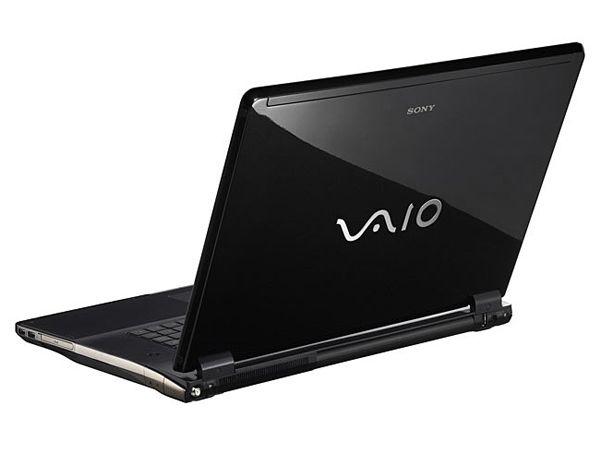
Review: Sony VAIO AR190G Laptop

Sony VAIO AR190G Laptop, front view.Laptops used to be the redheaded stepchildren of the computer industry, forced to wait for hand-me-down technology that appeared months earlier on their desktop brethren. Oh, how times have changed. The Sony VAIO AR190G, is the first computer we've laid hands on - laptop or desktop PC - to feature an optical drive that can not only read Blu-ray Disc (BD) media, but write and rewrite on it - as opposed to the Toshiba Qosmio G35-AV650, which can read HD-DVD media but not write on it.

Features in a nutshell:
  • Intel Core Duo T2500 processor (2.0GHz)

  • 1GB of DDR2 SDRAM (maximum capacity 2GB)

  • 200GB 5,400rpm SATA hard drive

  • Optical drive writes (at 1X) and reads (at 1.6X) Blu-ray discs (BD-R, BD-RE, BD-ROM), and just about any other format you care to throw at it

  • 17-inch wide-screen display, 1,920x1,200 (WUXGA)

  • Nvidia GeForce Go 7600GT graphics card (with 256MB of VRAM)

  • Windows XP Media Center 2005

  • Video connections: TV tuner, HDMI output, S-Video input and output, VGA output, FireWire

  • Audio connections: S/PDIF, headphone, microphone

  • Other connections: PC Card, ExpressCard, 3 USB 2.0 ports

  • Network connections: Bluetooth, Intel PRO/Wireless 802.11a/b/g, Gigabit Ethernet, 56K modem

  • Price: $3,500


Sony VAIO AR190G Laptop, rear view.Being marketed as a portable, end-to-end HD studio, the VAIO AR190G offers a pretty compelling set of A/V features to back up the claim: in addition to the BD drive, a 17-inch wide-screen display (WUXGA), an HDMI output, and a FireWire connection, you get a 2.0GHz Intel Core Duo processor, a midrange Nvidia GeForce Go 7600GT GPU with 256MB of VRAM, a 200GB hard drive and a TV tuner.

At $3,500, the VAIO AR190G is intended primarily for the long-suffering professional video editors and producers whose HD files have been marooned on laptop hard drives or trapped on DVD-ROMs, which are not supported by Blu-ray set-top players. With the VAIO AR190G, you can now import a video directly from an HD camera (via FireWire), edit the content on an excellent 17-inch 1080p display, and burn it to a Blu-ray disc or play it on an HDTV or monitor (via the HDMI connection) - never settling for less-than-HD-quality compression, media, or playback.

Of course, as with most new technologies, you will have to suffer a number of indignities with the VAIO AR190G. Aside from the high price point of the laptop itself, there's the painful price of media: approximately $20 for a 25GB BD-R or $25 for a 25GB BD-RW, both of which burn at a syrupy 1X. (Fortunately, a 50GB BD-R will soon be available for $48 and a 50GB BD-RE for $55 - ouch.) Note that Sony will also sell less expensive VAIO AR models, without the BD drive, starting at $1,749.

After spending a few days with the VAIO AR190G, we have a few preliminary observations:
  • Another dazzling display from Sony; like the VAIO AX and VAIO A before it, the VAIO AR's 17-inch 1,920x1,200 wide screen is one of the best in its class, along with the Qosmio's and the Fujitsu LifeBook N6000 series'.

  • None of the HD-ready LCD monitors in our Labs was equipped with an HDMI connection, and the VAIO AR190G lacks a DVI output, so we had to do some jury-rigging (HDMI cable with DVI adapter) to get hooked up.

  • Elegant design: tasteful, piano black with chrome trim

  • Complete set of multimedia controls

  • Only three USB ports, which is lame, though you also get FireWire, S-Video (out and in), S/PDIF, HDMI, and VGA.

  • Speakers are OK, but don't crank as loud as the Inspiron E1705's set.

  • Strange that the 8.5-pound VAIO AR has virtually the same keyboard as the 3.5-pound VAIO SZ; it's a great keyboard for a thin-and-light, but Sony couldn't afford to put a few more keys on something as big as the VAIO AR?

  • The VAIO AR190G's touch-pad buttons, placed along the outer edge of the case, are too far away from the touch pad itself.

Bundle offers better backup for virtual kit

Disaster recovery tool replicates active virtual machines from one server to another

Virtual server tools specialist Vizioncore last week announced EsxEssentials, a new software bundle that combines its EsxRanger Pro backup tool with its EsxReplicator and EsxCharter monitoring tools.

The main feature of EsxRanger Pro is that it can work with virtual machines (VMs) that are actually running. EsxReplicator is a disaster recovery tool that replicates a running VM or group of VMs from one server to another, complete with all settings. EsxCharter is a real-time monitoring tool that can be used by administrators to spot bottlenecks and issue alerts when problems arise. The combination package provides a comprehensive set of tools to run production-grade applications on a VMware ESX Server system.

David Bieneman, Vizioncore’s chief executive, said expert Linux administrators could use Linux scripts instead of Vizioncore’s graphical tools, but argued that Vizioncore’s Windows-based tools are much simpler, so most Linux experts would prefer to use them to free their time for other tasks. “The command prompt turns people off from VMware. Not everyone on staff understands the Linux command line,” he added.

The news comes a few weeks ahead of a major update to VMware’s ESX Server and VirtualCenter management tools, which is expected to be announced at the beginning of June.

Vizioncore’s new bundle costs $899 (£480) per CPU and is available now. Previously the three tools would have cost over $1,250 (£670) per CPU.

VoIP tailored for mid-sized firms

SMEs have been slow to see advantages of voice/data technology

Avaya is aiming to meet demand for IP telephony systems among medium-sized companies by offering an all-in-one product engineered for fast, easy installation and customisation by users.

The MultiVantage Express package incorporates existing Avaya contact centre routing and reporting, auto-attendant, conferencing, softphone and follow-me applications alongside voicemail and mobility extension features that see desktop phone functions exported to mobile handsets.

It has been designed to be as simple as possible for Avaya’s channel partners to deploy, with all the applications shipped on the same DVD and running on a single server rather than multiple computers. It also allows users themselves to configure handset features and call paths, thus reducing work for network administrators, according to Avaya marketing manager Tony May.

Avaya has also changed its pricing strategy for MultiVantage Express, leaving firms with less flexibility about which features or applications they can choose to deploy and pay for. Nor is there any integration with existing analogue telephony systems.

“Because it is an all-in-one solution, there is a limited range of options, otherwise it could step outside the simplicity boundary,” added May. He stressed that total cost of ownership would be up to 50 percent lower than traditional telephony systems based on desktop phones and private branch exchanges.

Rob Bamforth of analyst firm Quocirca believes that mid-sized firms have been much slower than others to embrace the benefits of VoIP, possibly because they are still focused on cost savings as the major upgrade driver.

“The number of large firms replacing traditional telephony systems with VoIP has grown, and there is lots of interest in tools like Skype Plus at the low end, but there’s a cut-off line at 50 to 1,000 employees where there is less commitment,” Bamforth said.

Vendor helps branches manage unified threats

Divides the security burden between central and remote site appliances

Network security vendor Check Point has released its VPN-1 UTM [unified threat management] software suite, designed to aggregate branch office security onto a single system. It also launched its VPN-1 Power suite for firms needing higher performance and throughput.

Both packages can be managed by IT staff at a central location, and they will require little training if there is a familiarity with Check Point’s earlier security hardware and software.

Check Point’s UK security engineer manager, Caroline Ikomi, said, “For large enterprises there’s a clear split between their branch offices and their core networks. This is reflected in what we’ve done here. We’ve given an option of UTM for large enterprise branch offices, but for central sites they’ll need high performance and high throughput with not everything loaded onto one box.”

VPN-1 UTM boasts an intrusion-prevention system (IPS), antivirus and Secure Sockets Layer VPN capabilities, and a standard network firewall plus a web-application firewall. “You can also install the Integrity [host checking] software we acquired from Zone Labs on the same system and this gives tighter integration and one set of admin consoles, making the whole system easier to set up and configure,” added Ikomi.

Check Point’s software can be installed on commodity hardware, or on dedicated appliances available through Check Point’s hardware partners such as Crossbeam or Nokia.

Nokia has already launched its IP390 Firewall/VPN appliance, which is the first platform to support VPN-1 UTM and Power software.

VPN-1 UTM and VPN-1 Power are available now. Nokia’s IP390 is also shipping, priced from £3,700 + VAT.

Research firm IDC predicts that by 2008 the UTM market will be worth nearly $3.5bn. Other security vendors such as 3Com, Symantec, SonicWall and Zyxel have also launched UTM systems in the past six months.

Size does matter for World Cup fans

Research shows biggest attraction for footie fans is the size of the TV screen

Resellers selling TV screens into the leisure market could benefit from new research from Steljes that could convince pub landlords to buy the largest screen size on the market.

The size of a pub’s TV/screen is the number one draw for people planning to watch the FIFA World Cup away from home, research from Steljes has revealed.

The distributor's study found that 80 per cent of 20-34 year olds planned to watch England’s World Cup matches in the pub. Of these, more than three-quarters (76 per cent) said that the choice of venue depended on whether it had a large screen on which to view a game. This was regarded as more important than an accessible bar (12 per cent), comfortable surroundings (eight per cent) or friendly service (four per cent).

Of those questioned, 62 per cent said the size of screen was of vital importance, and 86 per cent said they would be put off going to a pub which only showed matches on small TV screens.

“With the World Cup just a few weeks away, many pubs and clubs are gearing themselves up for a very busy period,” said Warwick Hill, managing director of Steljes Managed Services. “Now’s the time to make sure that they have the equipment, people and, of course, beer in place to make sure punters have a good time.”

Equipment disposal law threatens to hike IT prices

The DTI plans to impose new responsibilities on equipment vendors next year

The latest round of informal industry consultation for the implementation of the European Waste Electrical and Electronic Equipment (WEEE) directive in the UK will end tomorrow with the Department of Trade and Industry (DTI) predicting that the controversial rules will finally be incorporated into domestic law next year.

A DTI spokeswoman said a final round of formal consultation will take place later this summer with the government "strongly recommending" that its existing implementation plan is supported. "We can't pre-empt the final consultation," she added. "But we will be pushing [the plan currently] on the table and hope to have [the final bill] before Parliament by the end of the year."

Many experts claim the proposed legislation is still too complex and some stakeholders are expected to lobby for further amendments during the final consultation period. But if the DTI can stick to its timeline the bill should pass into law in mid-2007 – almost two years after the original European Union deadline.

Under the legislation producers of IT equipment will have to safely dispose of a proportion of kit at the end of its life to reflect their market share. This concept of "producer responsibility" means there should be little direct impact on IT directors, and the DTI claimed there will be "no additional reporting requirements placed on business end-users".

However, some experts warned that the legislation would increase hardware prices as manufacturers pass the cost of WEEE compliance onto customers.

Eric Karofsky of analyst firm AMR Research predicted a "substantial" increase in the cost of IT equipment as a result of the directive. "[WEEE] is still dramatically complex and I've spoken to [IT] manufacturers who still don't know if they are going to have to set up reverse logistics system [to comply] or instead use government [disposal] initiatives," he explained. "The cost [of any changes manufacturers have to make] will get rolled onto the customers."

However, Derek Morgan of IT asset management specialist CKS Group claimed fears of price inflation were unwarranted. "The rate of price deflation for new technologies is significantly higher than the cost of safely disposing of IT equipment," he claimed.

VoIP may be next for archiving regulations

Will VoIP conversations have to be stored like emails to keep in with data laws?

IT chiefs were have been warned to prepare for the possibility of new corporate governance rules that would require them to keep records of voice-over-IP (VoIP) conversations alongside email, instant messaging and other forms of communication.

Speaking at the Symantec user event in San Francisco last week, Jeremy Burton, a senior vice-president at the security specialist, said, “Financial institutions in the US already need to keep voicemail because it is stored on disk. As soon as the regulators figure out that VoIP is a digital stream, they will probably try to force that to be kept as well.”

Calls would have to be stored in their original audio format, rather than being automatically compressed and indexed using speech-to-text tools, according to Burton, because otherwise lawyers could argue that the original content had been altered. He added that any VoIP archiving legislation is at least two to three years away, but the prospect still alarmed IT managers already struggling to meet existing compliance requirements and manage rapidly expanding data volumes.

Chris Kadwill, ICT manager at Luton Borough Council, said he is resigned to rules demanding VoIP archiving in future. “We have a call centre employing 70 agents that handles over 300,000 telephone calls a year. If we have to record and store all of those, we are talking about many extra terabytes of data,” he added.

Legal experts foresaw other challenges. “There would be an obstacle in recording telephone conversations as that’s unlawful unless certain conditions are met,” said Mike Conradi, head of technology practice at law firm Stephenson Harwood.

Conradi added that he had not yet heard of proposals to change UK regulations to encompass VoIP records.

George Gardiner of IT law practice Gardiner & Co argued that VoIP archiving rules might not prove as onerous as feared. “I don’t think the regulators are expecting you to put in million-dollar systems or voice transcripts. At most they want something that says, ‘This number called this number at this time on this day and here’s the WAV file,’” he predicted.

Flat-rate mobile web access 'doomed'

Industry gets tough on bandwidth hogs

The prospects for uncapped internet access via mobile phones look to be dead in the water, according to analysts.

The industry will instead move towards variable quality service offerings, with low grade access for basic voice calls but the option to pay for upgraded services for high quality applications like TV or video conferencing.

"Industry pricing is moving from flat-rate to subscription-based access," said Bernt Ostergaard, research director for business telecoms services in Europe at Current Analysis.

"The idea of unlimited bandwidth is ludicrous. The normal distribution of customers shows that there are always around five per cent of bandwidth hogs, and carriers want to nip those users off."

Taking the PC industry as an example he pointed out that the demand for bandwidth is huge but that services like IP television or videoconferencing need guaranteed bandwidth if they are to work with acceptable quality.

But some in the industry disagree, pointing out that the way end users try new things with unlimited bandwidth is an important way to identify new services that can be used to grow revenue.

"The industry is not doing a good service in pushing users off because they are trying new things," said Marc Rotthier, vice president of network and service provider business in EMEA at HP. "Rather than trying to cut it we should see it as a new revenue opportunity."

Rotthier used the example of 3G phones that were sold with unlimited calls. In some cases parents were using them as baby monitors, leaving the call on 24/7 so that they could listen to their child.

Cheapflights updates web software

Travel firm deploys new content management system

Online travel firm Cheapflights has deployed a content management system to improve the timing and delivery of resort information and special offers.

The company, which provides travel price, search and comparison services, is deploying Percussion Software’s Rhythmyx technology for sites in the UK and USA to provide extra information linked to search results.

A bespoke data management system identifies and sorts up to 15 million deals a day from 500 travel industry advertising partners and aims to present the best and timeliest deals.

Rhythmyx allows customisation to be focused on meeting specific needs, will be used to control the delivery of commercially sensitive and time critical content such as special flight or hotel offers which coincide with key calendar dates.

‘The delivery of additional content to Cheapflights users to help them make more informed decisions will help build traffic further as well as loyalty,’ said Milenko Beslic, head of technology (USA), Cheapflights.

Beslic says use of XML standards was key in choosing the software.

‘It allows us to leverage our existing technology so deployment time and resource utilisation was much improved. The advanced workflow and management integration with standard wordprocessing applications were also a key selling point for our editorial teams,’ he said.

China rocked by 'sandpaper' chip fraud

Respected professor accused of relabelling Motorola chips as his own invention

The revelation that a groundbreaking mobile phone chip is a fake has shocked China, where the home-grown 'invention' had become a source of considerable national pride.

Shanghai's prestigious Jiaotong University announced at the weekend that the Hanxin DSP (digital signal processing) chip had been faked by inventor Professor Chen Jin, who was also the dean of the university's School of Microelectronics.

Rumours of foul play have been swirling around the project for several months, and appear to have provided the impetus for the investigation of Professor Chen.

One anonymous online forum post that began circulating in China in January claimed that Professor Chen had created the original Hanxin chips simply by grinding away the top surface of some of Motorola's Freescale DSP chips with sandpaper and having them reprinted with the Hanxin logo.

The university did not confirm this version of events, but investigators told local media that the chip had used "foreign" technology.

They also said that, contrary to claims by the design team, Hanxin's performance in tasks like media encoding and fingerprint image matching had failed to meet targets.
Professor Chen, a 38 year-old who earned his doctorate at the University of Texas at Austin, has been lauded by the media and feted by China's political leaders during the past three years.

However, he has now been fired from his post and will have to repay millions of dollars in government funds invested in the project, reports say.

Angry comments on Chinese forums and blogs have called for everything from criminal charges to execution for the disgraced academic.

Projects like the Hanxin chip have become entangled with issues of national pride in China.

The country is heavily dependent on expensive foreign technology for its huge, and growing, electronics manufacturing industry. The word 'Hanxin' can be translated as 'Chinese heart' or 'Chinese core'.

Growing dependence on international trade, and membership of the World Trade Organisation, have forced China to adhere more strongly to rules on intellectual property rights.

In recent years the government has been strongly promoting home-grown technology as a way to reduce payments to foreign patent holders like mobile phone chip maker Qualcomm.

Foreign chip manufacturers provided about 80 per cent of the chips used in Chinese-made products last year, earning some $36bn in revenue in the country.

The first version of the Hanxin was unveiled to much fanfare in February 2003, amid proud boasts from political leaders that Shanghai could soon become one of the world's top chip manufacturing centres.

The Hanxin chips could be used in mobile phones and would help China develop its own digital signal processor chip technology without having to pay for foreign intellectual property rights, Ministry of Science and Technology officials told journalists.

IBM planned to use the chip in future products, Chinese media reports claimed last year. However, a search of IBM's China and international websites returns no hits for Hanxin in English or Chinese.

Professor Chen and the university set up a company, Hisys, to develop and market the DSP chip. The Hisys website is currently offline, as are the university's pages about the invention.

Earlier this year, Chen and his 100-strong team began work on a new, more advanced version of the Hanxin. The now-cancelled Hanxin 5 was to be a system-on-a-chip which would combine a CPU with DSP functions.

Pilkington sees the way to online learning

Glass manufacturer signs £380,000 contract to support 24,000 staff

Glass maker Pilkington has signed a £380,000 three-year contract to supply online training to its 24,000-strong workforce following a successful pilot.

Online learning provider SkillSoft will provide management, business, health and safety, IT and desktop skills training to the global manufacturer.

Pilkington says the business, management and technical skills of its workforce is critical to success, and the company wanted a cost-effective and consistent global approach to learning.

‘As a manufacturer, we are very lean. There is not a massive infrastructure for training and development, and elearning is a way of providing quality training,’ said Roy Prescott, group learning and development manager for Pilkington.

The elearning will be deployed via SkillSoft’s learning management system, SkillPort, and will be accessible online. Content will be available in several languages, including Spanish, Polish and Mandarin.

Prescott says the success of the six-month trial was critical to signing the contract, following service and deployment issues with a previous elearning provider.

During the trial Pilkington had over 500 new registered users and more than 700 completed programmes.

‘Previously, we chose internal hosting which proved problematic. The elearning system was sharing servers with other applications around the world and Java script was a particular problem. In some countries, parts of the programme never got off the ground,’ said Prescott.

Now Pilkington has a single global IT organisation and has standardised on Microsoft Office XP 2003.

‘It is very centralised and we have standardised operating systems, but we decided to choose external hosting as it is easier and employees have access from home,’ said Prescott.

He says the success of elearning depends on management support.

‘Local management support is utterly critical and you’ve got to keep reminding them about elearning, but it has got to be driven locally, as elearning must be integrated with the local management systems and culture,’ said Prescott.

Women boost online music downloads

Broadening their musical horizons

Female fans are driving up music sales thanks to technology which allows them to buy songs without having to visit High Fidelity-style record shops.

Sophie Watson Smyth, marketing manager at Q and Mojo, suggested that technology had changed the way in which women approach music.

"The freedom afforded by new technology means that women are now confidently downloading music at home and broadening their musical horizons in private," she said.

Over three-quarters of women in the UK aged 16 to 45 now own an MP3 player or an MP3 phone, according to research by Emap, and nearly two million cannot imagine life without the gadget.

The research found that the typical female user is 16 to 24 years old, listens to between one and two hours of music a day, and spends approximately £10 a month on music downloads.

Women also listen to more podcasts per day than men, at 17 per cent compared to nine per cent of men.

Seventy per cent of the female respondents indicated that their taste in music has broadened because of new technologies, while 80 per cent have rediscovered old artists, albums and songs.

Just under two-thirds of women now spend more time on the internet looking for new music, and a third spend more money on music than they used to.

Wi-Fi/IP convergence not ready until 2008

IP Multimedia Subsystem standard needs some shaking out

IP Multimedia Subsystem (IMS) technology is being held back by equipment vendors' poor adherence to standards, and by conflict between competing factions within telecoms companies, industry experts said today.

"We are at a similar stage to that with VoIP when Cisco was the only game in town," said Bernt Ostergaard, research director for business telecoms services in Europe at analyst firm Current Analysis.

"IMS is still in that place; you are not buying IMS as such, you are buying from a specific manufacturer. We will not see widescale IMS deployment until 2008."

Ostergaard added that governments and regulators are putting obstacles in the way of pure IP-based systems by insisting that measures are put into place for organisations such as the emergency services.

Bob Brace, vice president of mobile solutions at Nokia, agreed that true interactivity is still not possible but insisted that the situation is improving rapidly.

"All IMS platforms are not working together as yet," he said. "It is not easy for other vendors to come in and start sharing services immediately, but we are starting to see much better interaction."

IMS seeks to establish a common IP-based protocol that allows fixed and mobile networks to interoperate.

The current version of the standard, run by the Third Generation Partnership Project, allows for interoperability between operators running 2G and 3G services, Wi-Fi services and fixed networks.

But problems between different vendors are going to put some companies out of business if the situation does not improve, according to Marc Rotthier, vice president of network and service provider business in EMEA at HP.

"The market is not at the end of the tunnel yet. The mindset is still around corner but it will happen. It must for cost purposes," Rotthier said.

"In the meantime we will see a few suppliers knocked out of the market by the usual competitive pressures."

Sponsored search results threaten security

Almost a tenth of sponsored results may pose risks

Sponsored results from leading search vendors may contain web addresses for dangerous or hostile sites which could compromise the security of corporate data, according to research by security vendor McAfee.

McAfee surveyed Google, Yahoo, MSN, AOL and Ask search results, and found all returned risky sites – up to 72 percent for results for popular keywords such as “popular software” and “digital music”.

Overall, 8.5 percent of sponsored links were rated red or yellow, according to the colour-coded safety assessment of the McAfee's SiteAdvisor tool, indicating they were risky. Of non-sponsored search results, only 3.1 percent were rated as risky.

Common techniques of hostile sites include bundling spyware and adware into downloads, and installing keylogging or screen-grabbing technology without the user's knowledge, according to McAfee security analyst Greg Day.

"The scope for [these things] is pretty much limitless," he said. " Businesses [should have policies] to say 'you shouldn't go to a site which could do potential harm to the business', enforcable with technology [like SiteAdvisor]."

Web firms accused of poor customer service

Finding help online like looking for a 'needle in haystack'

Web-based companies were today accused offering sub-standard customer service.

Internet service firm Transversal's annual online customer service analysis of 100 leading websites found that 69 per cent could answer fewer than four of the 10 most often asked customer questions.

Only 16 per cent answered more than six questions, which covered straightforward enquiries such as refund policies, tariffs and product details.

Consumers are being forced to wade through an ever-increasing number of web pages and, when that fails, to call or email overstretched contact centres, the report alleged.

Transversal found that the average wait for an email reply was 33 hours, and that 40 per cent of companies failed to give a useful answer to the customer's question.

The slowest response time was a shameful 385 hours, over 16 days after the original query was sent.

Unsurprisingly, given their focus on selling tangible goods, retailers came out top of those surveyed.

However, grocery, fashion and CD/book sites were still only able to answer half of the questions asked, and only 10 per cent had dedicated customer search facilities, thereby forcing consumers to spend time and effort locating answers.

Worst performers were travel and insurance websites which only managed to answer one question on average despite these sectors investing heavily in their online channels.

Slowest at responding was the utilities sector, averaging a tardy 102 hours to reply. Transversal suggested that this does little to inspire confidence in potential customers looking to switch suppliers.

According to the Office of Fair Trading, UK online retail sales increased by 356 per cent in the five years to 2005 and are now estimated at £8.2bn per year. This figure is forecast to increase by 163 per cent by 2010, when the value will approach £21.5bn.

"Our research shows that finding information online is like looking for a needle in a haystack, demonstrating a shameful disregard for customer service," said Davin Yap, chief executive at Transversal.

The research showed little improvement from 2005. The average number of questions answered online rose from two out of 10 to three out of 10, still well under the response rate that consumers rightly expect.

Transversal surveyed 100 organisations in the banking, insurance, travel, retail, telecoms and utilities sectors for its report.

Following a set methodology it asked 10 common, sector-specific questions on each site, as well as emailing a single question to customer service departments. Email responses were marked for relevance and time taken to respond.

PC sales keep chips cooking

Solid PC sales help to give semiconductor market a strong first quarter

Strong PC sales was one of the key reasons for a strong first quarter in the semiconductor market, according to the 2006 Q1 report from industry body the Semiconductor Industry Association (SIA).

Worldwide sales of semiconductors for Q1 2006 was $59.1bn, a 7.3 per cent increase compared with sales for Q1 2005. Against Q4 2005 sales, Q1 sales declined by 1.3 per cent, which is typical of seasonal demand patterns. March sales hit $19.7bn, up by 2.3 per cent over February.

Unit sales of PCs increased by 13 per cent in Q1 2006, compared with the same quarter of 2005.

George Scalise, SIA president, said: “Competition in the PC market was very intense in the first quarter of 2006. This means that consumers are finding extremely powerful notebook and desktops at very attractive prices.

“Microprocessor sales in Q1 2006 were $8.83bn, compared with $8.28bn in 2005, an increase of 6.8 per cent. There is evidence that PC prices are declining more rapidly than the historic rate of about 10 per cent a year. Once again, consumers are reaping the benefits of Moore’s Law in action.”

The SIA also noted that inventory in the supply chain for certain products is on the rise as manufacturers prepare for expected market growth.

“End-user demand, capacity utilisation and inventories are the most critical factors affecting industry growth,” Scalise said. “End-market demand remains generally strong, and capacity utilisation continues to be more than 90 per cent. We will watch the inventory situation closely, especially in market segments for consumer products.”

In the memory chip market, where both DRam and Flash prices are starting to pick up, Micron has agreed a deal with Photronics worth $135m to create a new company called MP Mask Technology Center.

The new company will develop and produce photomasks for leading-edge and next-generation semiconductors. The move represents a significant drive by Micron to become a leading player in the semiconductor production process.

Mark Durcan, chief operating officer at Micron, said: “The combined expertise of Micron and Photronics in the areas of advanced photomask technology development and fabrication will allow us to meet demands for increasingly high-density, low-power semiconductor devices.”